sungenbiomed
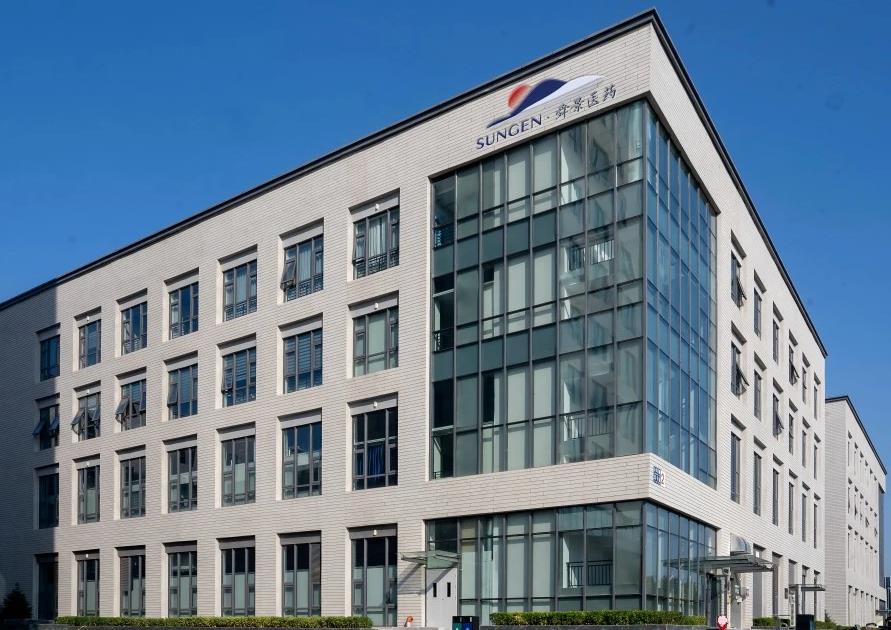
Sungen Biomedical was founded in 2019 which is an innovative antibody drug research and development enterprise incubated by Hotgen Biotech (SH688068), a listed company on the Sci-Tech innovation board. The co-founder of Sungen Biomedical is Professor Zhiwei Sun, Vice Chairman of China Monoclonal Antibody Industry Committee.
Contact us
What Are Antibody Drugs?
Antibody drugs, often referred to as therapeutic antibodies, represent a transformative class of treatments in modern medicine. These specialized proteins are engineered to target specific antigens associated with various diseases, offering precise therapeutic interventions. By carefully designing these antibodies to avoid binding to self-antigens or causing unintended immune reactions, researchers have unlocked their potential to address complex medical conditions, including cancers and autoimmune disorders, with remarkable efficacy.
The Fundamentals of Antibodies
Antibodies, or immunoglobulins, are pivotal components of the adaptive immune system. Their ability to recognize and neutralize pathogens with high specificity makes them indispensable in both natural immunity and biomedical applications.
Natural Antibody Structure
Antibodies are proteins with a distinctive Y-shaped configuration that plays a critical role in the immune system's ability to identify and neutralize threats. Composed of two heavy chains and two light chains connected by disulfide bonds, their structure is both robust and versatile. The antigen-binding regions, located at the tips of the Y, enable precise recognition of target antigens. Meanwhile, the Fc region interacts with immune cells and complement proteins, facilitating broader immune responses critical for pathogen elimination.
Immunological Mechanisms
Antibodies employ several immunological strategies to protect the body. They neutralize pathogens or toxins by binding to them, preventing interaction with host cells. Through opsonization, antibodies mark pathogens for destruction by immune cells like phagocytes. They also activate the complement system, which can lead to pathogen lysis or inflammation. Additionally, antibodies can engage immune cells, such as natural killer cells, to destroy targeted cells via antibody-dependent cell-mediated cytotoxicity (ADCC), amplifying their therapeutic impact.
Monoclonal & Polyclonal Antibodies
Monoclonal antibodies (mAbs) are derived from a single clone of B cells. These lab-engineered molecules play a critical role in many antibody-based treatments due to their ability to precisely target specific cells, minimizing unintended effects. Their high specificity makes them essential in therapies for diseases driven by particular cellular mechanisms.
The key differences between monoclonal (mAbs) and polyclonal antibodies (pAbs) lie in their origins, specificity, and uses. mAbs are produced from a single B-cell clone, ensuring uniform structure and binding to just one epitope on an antigen. Meanwhile, pAbs originate from multiple B-cell clones, recognizing a broader range of epitopes and displaying greater structural diversity.
Different Types of Antibody Drugs
Antibody Drugs By Development Generation
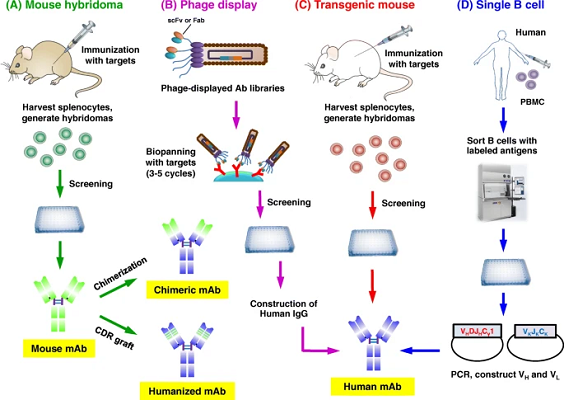
The development of therapeutic monoclonal antibodies (mAbs) has progressed through four generations, each representing significant advancements in reducing immunogenicity and improving clinical efficacy. The first generation, murine antibodies (e.g., muromonab-CD3), are fully derived from mice and often provoke strong immune responses in humans. To address this limitation, second-generation chimeric antibodies (e.g., rituximab) were engineered by fusing mouse variable regions with human constant regions, achieving about 70% human content. Third-generation humanized antibodies (e.g., trastuzumab) further increased human sequence to approximately 90% by retaining only the mouse complementarity-determining regions (CDRs) critical for antigen binding. Finally, fourth-generation fully human antibodies (e.g., adalimumab), generated through phage display or transgenic mice, eliminated murine components entirely, minimizing immunogenicity while maximizing therapeutic potential. This evolutionary path demonstrates the biopharmaceutical industry's continuous efforts to enhance antibody safety and efficacy.
Antibody Drugs By Functional Mechanism
Naked monoclonal antibodies function independently and are the most widely used type of antibody-based therapy. Examples include Alemtuzumab (Campath), Trastuzumab (Herceptin), Bevacizumab (Avastin), Cetuximab (Erbitux), and Rituximab (Rituxan).
Conjugated monoclonal antibodies are combined with chemotherapy drugs or radioactive substances to precisely target cancer cells. Some drugs that pair with chemotherapy include Brentuximab (Adcetris) and Ado-trastuzumab (Kadcyla), while Ibritumomab (Zevalin) is an example of a monoclonal antibody linked to radioactive particles.
Fc engineering focuses on improving the effectiveness and longevity of therapeutic antibodies by altering their Fc regions. A key advancement in this field involves modifying the antibody's crystallizable fragment (Fc) to strengthen effector functions such as antibody-dependent cellular cytotoxicity (ADCC), antibody-dependent cellular phagocytosis (ADCP), and complement-dependent cytotoxicity (CDC), thereby enhancing tumor cell destruction. Several Fc-engineered antibodies are currently being tested in preclinical studies or have shown promising results in clinical trials.
Immune checkpoint modulators are essential for controlling immune system activity. Irregularities in these checkpoints can lead to abnormal immune responses, contributing to chronic infections, autoimmune disorders, and cancer.
What are Antibody-Drug Conjugates (ADCs)?
Antibody drug conjugates (ADCs) represent a class of targeted biologics that combine monoclonal antibodies with potent cytotoxic agents through specific conjugation, enabling precise drug delivery. Functioning as biological carriers, these antibodies transport the therapeutic payload directly to tumor cells, where receptor-mediated endocytosis facilitates intracellular drug release, thereby significantly enhancing selective accumulation and therapeutic efficacy. ADC technology not only reduces the systemic toxicity associated with conventional chemotherapy but also offers novel therapeutic options for patients with suboptimal treatment responses or poor drug tolerance. Currently, ADCs have demonstrated substantial promise in clinical applications across various solid tumor treatments.
What is the structure of ADCs?
Monoclonal Antibody Scaffold – A targeting antibody that binds to cancer cell surface antigens and may also mediate therapeutic effects.
Cytotoxic Payload – The active drug component that kills cancer cells. Common payload classes include:
Microtubule inhibitors (e.g., MMAE, MMAF, mertansine)
DNA-damaging agents (e.g., calicheamicin)
Topoisomerase 1 inhibitors (e.g., SN-38, exatecan)
Glucocorticoid receptor modulators (GRMs) – currently the most active payload class for immune-stimulating ADCs (iADCs)
Linker Chemistry – The chemical bridge connecting the antibody to the payload, categorized as:
Cleavable linkers (disulfides, hydrazones, peptides) – Designed for tumor-specific release via enzymatic cleavage or acidic conditions.
Non-cleavable linkers (thioethers) – Require antibody degradation for payload release.
Targeted Delivery Mechanism
lAntigen-Specific Binding: The monoclonal antibody recognizes and binds to specific antigens on the surface of cancer cells with high affinity and selectivity. This ensures that the ADC targets tumor cells while sparing healthy tissues, reducing off-target effects.
lInternalization Process: Upon binding, the ADC-antigen complex is internalized into the cancer cell via receptor-mediated endocytosis. This process is highly dependent on the antigen's expression level and internalization kinetics, which are critical for effective drug delivery.
lIntracellular Payload Release: Once inside the cell, the linker is cleaved (in cleavable linkers) or the antibody is degraded (in non-cleavable linkers) within the lysosomal compartment, releasing the cytotoxic payload. The payload then exerts its therapeutic effect by disrupting critical cellular processes, such as microtubule dynamics or DNA replication, leading to apoptosis of the cancer cell.
What Are the Advantages of ADCs?
ADCs combine the precision of immunotherapy with the potency of chemotherapy, offering several significant benefits:
Increased tumor specificity and selectivity –Antibody-mediated delivery ensures high specificity for cancer cells, reducing off-target effects and improving drug tolerance.
Greater Cytotoxic Potential – By bypassing systemic toxicity, ADCs enable the use of ultra-potent payloads that would otherwise be too hazardous for conventional chemotherapy.
Broader Therapeutic Window – Optimized linker technology allows for higher drug doses with improved safety, maximizing efficacy while minimizing adverse effects.
What are Bispecific Antibody-Drug Conjugates (BsADCs)?
Bispecific antibodies are engineered antibodies capable of simultaneously binding to two distinct antigens or epitopes. Compared to monoclonal antibodies, they exhibit enhanced sensitivity, specificity, and the ability to modulate multiple pathways—such as immune cell recruitment, co-stimulation/co-inhibition of receptors, and viral neutralization. Due to their complex and diverse structures, bispecific antibodies present greater challenges in development. Currently, they are widely employed in treating various cancers (e.g., melanoma, Hodgkin lymphoma, liver cancer, and gastric cancer) and inflammatory diseases (e.g., rheumatoid arthritis, psoriasis, and Crohn's disease).
FDA Clears SGC001 Antibody for Emergency Use in AMI Trials
On May 23, 2024, the FDA approved the clinical trial application for SGC001, the world's first antibody drug for acute myocardial infarction (AMI), developed by Sungen Biomedical (incubated by Hotgen Biotech). This milestone highlights a breakthrough in innovative biopharmaceuticals.
SGC001, a monoclonal antibody, targets AMI—a life-threatening condition caused by coronary artery occlusion, leading to high mortality and complications. In China, heart attacks claim 2.5 million lives annually, with cases projected to reach 23 million by 2030. In the U.S., an MI occurs every 40 seconds, with 605,000 new attacks yearly.
Currently, no antibody therapy for AMI exists clinically. Preclinical studies show SGC001 reduces mortality, infarct size, and heart remodeling while improving cardiac function, positioning it as a potential first-in-class drug for global AMI patients. The FDA approval marks a key step toward internationalization for Sungen Biomedical.
Another Milestone: Anti-Tumor Bispecific Antibody SGT003
SGT003, an anti-tumor bispecific antibody developed by Sungen Biomedical, targets immunosuppressive Tregs and TAMs in the tumor microenvironment, showing superior efficacy and safety compared to existing immunotherapies (like PD-1/CTLA-4 inhibitors) by reducing tumor growth and preventing recurrence without triggering harmful cytokine release, positioning it as a potential next-generation cornerstone therapy in cancer immunotherapy.
References:
- Gu, Yizhe, et al. "Bispecific Antibody Drug Conjugates: Making 1+1>2." Acta Pharmaceutica Sinica B, vol. 14, no. 5, May 2024, pp. 1965-86. ScienceDirect, doi:10.1016/j.apsb.2024.01.009.
- Kim, Eui Sok, et al. "Immune Checkpoint Modulators: An Emerging Antiglioma Armamentarium." Journal of Immunology Research, vol. 2016, 2016, pp. 1-12. Hindawi, doi:10.1155/2016/4683607.
- Lu, Rou-Min, et al. "Development of Therapeutic Antibodies for the Treatment of Diseases." Journal of Biomedical Science, vol. 27, no. 1, 2020, pp. 1-30. BioMed Central, doi:10.1186/s12929-019-0592-z.
- https://en.wikipedia.org/wiki/Antibody%E2%80%93drug_conjugate
- https://www.proteogenix.science/scientific-corner/adc/mechanism-action-advantages/#what-are-the-advantages-of-adcs
Sungen Biomedical was founded in 2019 which is an innovative antibody drug research and development enterprise incubated by Hotgen Biotech (SH688068), a listed company on the Shanghai Stock Exchange. The co-founder of Sungen Biomedical is Professor Zhiwei Sun, Vice Chairman of China Monoclonal Antibody Industry Committee.
As one of bispecific antibody companies, we will do our best to meet all the needs of clients.
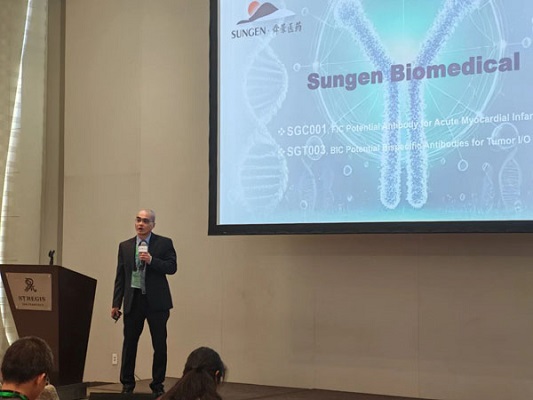
Riding the wave, The world's first acute myocardial infarction antibody SGC001 of Sungen Biomedical was presented at U.S. J.P. Morgan Conference
On January 12th, the 43rd Annual J.P. Morgan Healthcare Conference (JPM Conference), an influential investment seminar, took place in San Francisco. Sungen Biomedical made a notable presentation featuring SGC001, the world’s first antibody drug for the treatment of acute myocardial infarction (AMI). During the conference, Dr. Wei Zeng, representing Sungen Biomedical, provided an overview of the latest clinical advancements in SGC001 project.
Cardiovascular disease remains the leading cause of death world widely, accounting for about one-third of all deaths. About 2.5 million people die of heart attacks in China each year. SGC001 is the world's first monoclonal antibody drug for AMI developed by Sungen Biomedical. It can block the apoptosis of cardiomyocytes induced by target molecules, reduce the oxidative stress damage of cardiomyocytes, inhibit downstream inflammatory response, promote blood perfusion in ischemic areas, and reduce the size of myocardial infarction. Preclinical study data show that SGC001 has obvious therapeutic effects on heart failure and remodeling after MI, and can significantly reduce the death rate of MI. SGC001 has been approved by the US FDA and China NMPA for clinical trials, and the current phase I study shows that it has a good safety. SGC001 will break through the limitations of existing AMI therapy and bring more hopes to patients.
Sungen Biomedical's appearance at this JPM event, with its innovative technology platform and differentiated R&D pipeline, not only attracted the attention of global investment institutions, but also demonstrated the company's scientific and technological innovation strength. It lays a solid foundation for its future global layout, cooperative development and market expansion. Focusing on uncovered medical needs, Sungenbiomed will collaborate with international partners to provide more treatment options for patients around the world.
As the most prestigious industry summit in the world, JPM Conference was coming as expected this year. It is the largest and most influential, international, health-investment, financing seminar and business development conference in the global medical industry, bringing together the world's top pharmaceutical companies, innovative company experts and investment professionals.
Sungen Biomedical is an innovation-driven biomedical company dedicated to the discovery, development and commercialization of original (FIC) antibody drugs. With excellent scientific research and innovative drug development capabilities, guided by unmet clinical needs, Sungen has built a series of international-level technological platforms, and established a number of original biological macromolecule product pipelines with great market potential, involving the treatment of cardiovascular and cerebrovascular diseases, tumors, neurodegeneration and other diseases.
As an antibody discovery platform, we are committed to fully meeting all client needs.
Quality Control Platform
Biomolecular Interaction Analysis System
Tests for molecular weight, sequence coverage rate, disulfide bond location, peptide map peak attribution, N/C terminal amino acid sequence determination, post-translational modification ratio and site identification, DAR value determination, and unknown peak identification, etc. These tests are part of our comprehensive drug discovery platforms, enabling precise protein analysis and interaction studies.
High-Throughput Multi-Parameter Protein Stability Analyzer
To detect protein - protein interaction, protein - ion interaction, nucleic acid protein interaction, nucleic acid - protein nucleic acid complex interaction, antibody and virus interaction, etc.
Capillary Electrophoresis
To detect Tm (melting temperature), Tagg (aggregation temperature), particle size, isothermal stability, colloidal dispersion stability (B22, G22, kD) and viscosity, etc.
We can provide kinds of nucleic acid interacting agents for sale, anything you need, please contact us.
If you want to know more about quality control for pharmaceutical industry, please visit our website.
Quality management in clinical trials is systematic procedures ensuring drug clinical research complies with regulations and ethics. It covers the full trial cycle to control variables affecting accuracy. Following XX regulatory guidelines, we implement multi-layer inspections to correct non-compliance timely, supporting drug marketing approval with reliable data.
Sungen Biomedical was founded in 2019 which is an innovative antibody drug research and development enterprise incubated by Hotgen Biotech (SH688068), a listed company on the Shanghai Stock Exchange. The co-founder of Sungen Biomedical is Professor Zhiwei Sun, Vice Chairman of China Monoclonal Antibody Industry Committee.